 11digitalmind@gmail.com

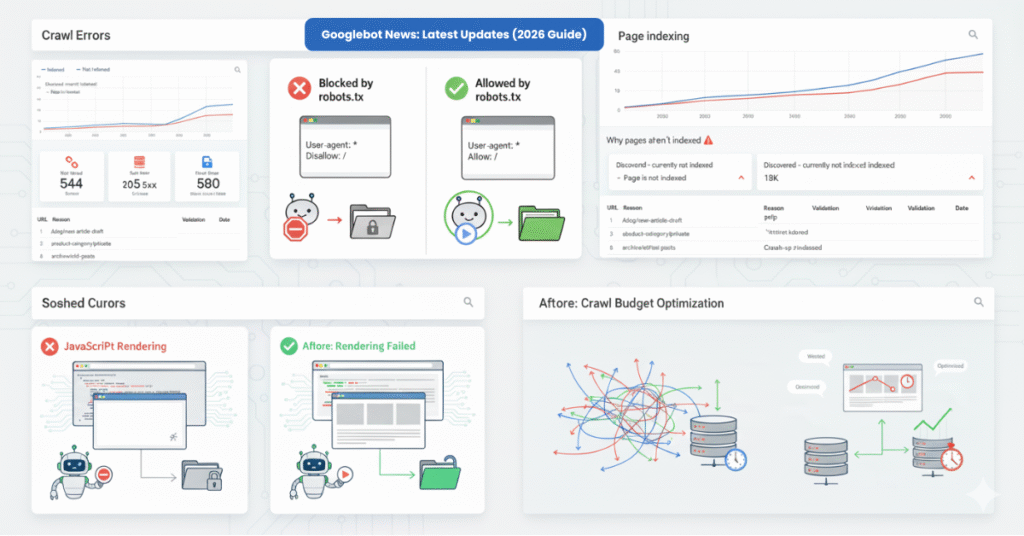
Googlebot is very important with regards to how websites show up in a Google search engine results page. Every time Google gives an update concerning crawling, rendering, and indexing, this affects SEO performance.
Remaining updated with all the latest news about Googlebot News: Latest Updates (2026 Guide) is not an option anymore; rather, it’s a necessity for all webmasters and SEO companies.
In this tutorial, we will walk you through the update news of Googlebot, information on how Googlebot operates, recent updates in Googlebot, and steps to make your site optimized with Googlebot in 2026.
What Is Googlebot?
Googlebot is the web crawling software developed by Google to discover, crawl, render, and index the Web pages.
Once Googlebot has crawled your site, Google determines whether or not the page merits being indexed and ranked in search results.
Types of Googlebot
- Googlebot Smartphone (Primary crawler due to mobile-first indexing)
- Googlebot Desktop
- Googlebot Image
- Googlebot Video
- Googlebot News
In 2026, Googlebot Smartphone is the dominant crawler for almost all websites.
Googlebot News Latest Updates You Should Know In 2026
Google has been doing a few very important updates for the behavior of Googlebot in the last one year. These are the most impactful updates:
1. Smarter Crawling Based on Site Quality
Googlebot now prioritizes:
- Fast-loading websites
- Clean internal linking
- Strong server performance
Low-quality, slow, or error-prone sites may be crawled less frequently.
2. Improved JavaScript Rendering
With the update, Googlebot’s rendering engine is much closer to the latest version of Chromium, meaning:
- Better handling of JavaScript-heavy websites
- Faster rendering of SPAs (React, Angular, Vue)
- Improved indexing of dynamic content
However, poorly optimized JS can still delay indexing.
3. Crawl Budget Optimization Becomes More Important
Googlebot now focuses crawl budget on:
- High-value pages
- Frequently updated pages
- Pages with strong internal links
Thin, duplicate, or poor-quality URLs can be crawled less frequently.
4. Mobile-First Indexing Is Fully Enforced
Googlebot evaluates your website based on:
- Mobile content
- Mobile speed
- Mobile UX
Make sure your mobile search ranking strength is not compromised. A poor mobile search ranking can impact your search engine ranking performance despite a perfect desktop search ranking.
How Googlebot Crawls and Indexes Websites
To better optimize, you need to understand how Googlebot functions.
Step 1: Discovery
Googlebot discovers pages through:
- Internal links
- External backlinks
- XML sitemaps
If a page is not linked properly, Googlebot may never find it.
Step 2: Crawling
Googlebot visits the page and checks:
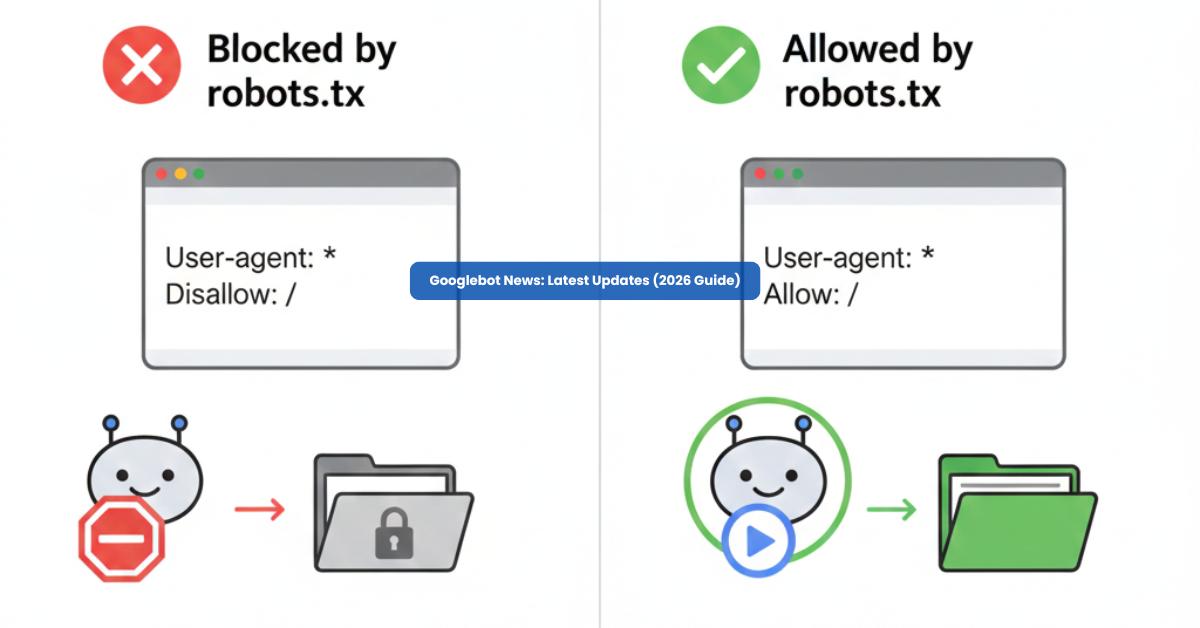
- robots.txt rules
- HTTP status codes
- Server response time
Pages that are slow or blocked are crawled less frequently.
Step 3: Rendering
Googlebot renders the page like a browser:
- Executes JavaScript
- Loads CSS
- Processes content
Rendering problems may result from heavy scripts or blocked resources.
Step 4: Indexing
Google will index the page and make it eligible for ranking if it satisfies the quality standards necessary for the page.
Googlebot News Latest Updates 2026 and Their Impact on SEO
New Googlebot updates have a direct impact on search engine optimization in a variety of ways:
✔ Rankings
Better crawlability = better indexing = higher ranking potential.
✔ Crawl Budget
The crawl budget of large websites needs to be carefully managed to ensure that important pages are indexed.
✔ Core Web Vitals
Slow pages discourage frequent crawling.
✔ Technical SEO
Errors like 404s, redirect chains, and blocked JS hurt Googlebot efficiency.
How to Optimize Your Website for Googlebot (2026 Best Practices)
Here is how SEO experts optimize websites for Googlebot today
1. Optimize robots.txt Properly
- Don’t block CSS or JavaScript files
- Avoid blocking important pages accidentally
- Allow Googlebot access to critical assets
2. Use XML Sitemaps Correctly
- Submit clean XML sitemaps
- Remove noindex or 404 URLs
- Update sitemaps when new pages are added
3. Improve Page Speed
Improve Page Speed
Focus on:
- Image compression
- Lazy loading
- Fast hosting
- Minimal JS execution
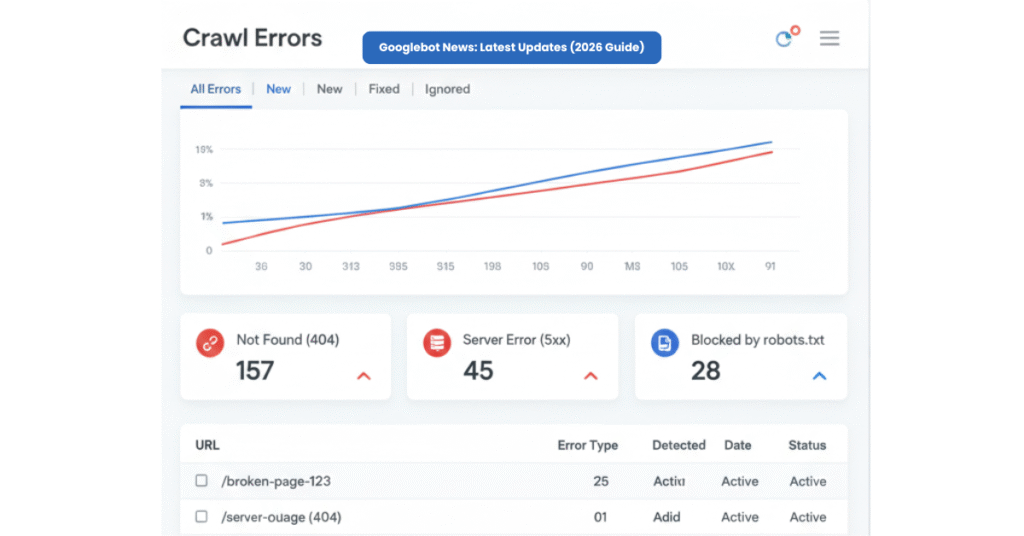
4. Fix Crawl Errors
Regularly monitor:
- 404 errors
- 500 server errors
- Redirect loops
- Soft 404s
Use Google Search Console to fix them quickly.
5. Strengthen Internal Linking
Strong internal links:
- Assist Googlebot in discovering pages more quickly.
- Crawl budget should be distributed economically.
- Make the indexing better.
Googlebot & Technical SEO Factors
The crawling and indexing processes are directly impacted by these technical elements:
HTTP Status Codes
- 200 → OK
- 301 → Permanent redirect
- 404 → Not found
- 503 → Temporary unavailable (use during maintenance only)
Canonical Tags
Helps Googlebot avoid duplicate content issues.
Structured Data
Schema helps Google understand content better, though it doesn’t directly affect crawling speed.
Log File Analysis
Advanced SEO teams analyze server logs to see:
- How often Googlebot visits
- Which pages are crawled
- Wasted crawl budget
How to Track Googlebot Activity
Use these tools to monitor Googlebot behavior:
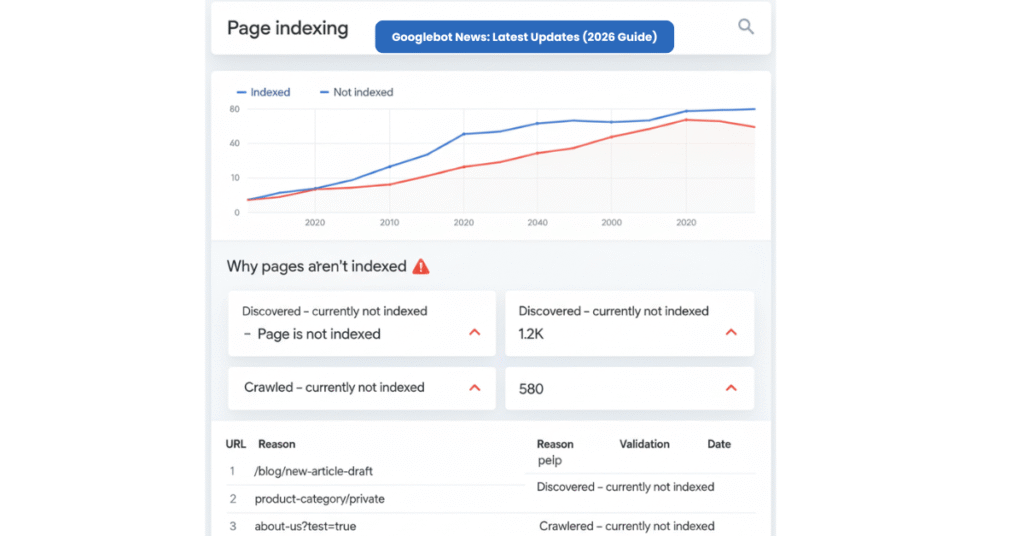
1. Google Search Console
- Crawl stats report
- Index coverage report
- Page indexing status
2. Server Logs
Shows real Googlebot hits and crawl frequency.
3. URL Inspection Tool
Check:
- Crawl status
- Last crawl date
- Indexing eligibility
Common Mistakes to Avoid According to Googlebot News: Latest Updates (2026 Guide)
Avoid these errors that hurt crawling and indexing:
- Blocking important URLs in robots.txt
- Using noindex incorrectly
- Poor mobile experience
- Heavy JavaScript without optimization
- Broken internal links
- Slow server response times
FAQs – Googlebot News
1. How do Googlebot updates impact SEO rankings?
Googlebot updates affect how websites are crawled and indexed. Better crawlability, faster page speed, and strong mobile optimization help improve rankings.
2. How often does Googlebot crawl a website?
Crawl frequency depends on site quality, update frequency, server performance, and internal linking strength.
3. Does Googlebot prioritize mobile websites?
Yes. Googlebot primarily uses mobile-first indexing, meaning your mobile version is evaluated for ranking.
4. Can Googlebot crawl JavaScript websites?
Yes, but heavy or poorly optimized JavaScript can slow rendering and delay indexing.
5. How can I check Googlebot activity on my site?
You can monitor Googlebot crawling using Google Search Console crawl stats and server log files.
Conclusions and Reflections on Googlebot News: Latest Updates (2026 Guide)
Googlebot is gaining intelligence, speed, and the ability to be more selective.
In the year 2026, the success of your search engine optimization efforts is heavily dependent on how well your website supports the crawling and rendering needs of Googlebot.
Your rankings and organic traffic can be significantly improved by keeping up with the latest Googlebot news, addressing any technical SEO issues that may arise, and optimizing the crawl efficiency of your website.
Need Help With Googlebot & Technical SEO?
At 11Digital Mind, we help businesses:
- Fix Googlebot crawling & indexing issues
- Optimize crawl budget
- Improve technical SEO performance
- Boost organic visibility
👉 Get a Free Technical SEO Audit Today
👉 Let Googlebot Love Your Website

Brilliant information, Ms Chinki
Will definitely keep this in loop for my my online store.
Thank you Anmol Arya
Well-explained and easy-to-understand guide on Googlebot updates. The article clearly covers crawling, mobile-first indexing, and technical SEO best practices, which makes it useful for both beginners and marketers. Adding a few official Google references or case examples could make it even stronger. Overall, a valuable and informative read.